
While MCCH prides itself on creating innovative and successful solutions to address the needs of our clients, we know that systemic change is necessary in order to truly end homelessness in our community. Accordingly, MCCH is a strong advocate for county participation in national campaigns and the adoption of best practices to create a system to make homelessness in Montgomery County a rare, brief and non-recurring experience.
MCCH has worked closely with Montgomery County to co-lead local efforts for the following national campaigns to address specific populations' needs:
- 100,000 HOMES Campaign: Created permanent homes for the most medically vulnerable adults experiencing homelessness in the county in 2014. Led to the establishment of the county’s Coordinated Entry System for transitioning clients from homelessness into permanent housing programs.
- Zero: 2016: Ended veteran homelessness in January 2016 by achieving “functional zero.” One of the first four communities recognized for this achievement by the U.S. Dept. of Housing and Urban Development, Dept. of Veterans Affairs, and U.S. Interagency Council on Homelessness.
- Inside (Not Outside): Progressing towards a goal of ending chronic homelessness in the county in 2018. To date, more than 375 individuals who have a diagnosed disability and have experienced long-term homelessness have been connected to a permanent housing solution as part of this community-wide effort.
MCCH's Testimony Before the Montgomery County Council on April 9, 2026
On the County’s Proposed Fiscal Year 2027 Operating Budget
Jen Schiller, Chief Executive Officer
April 9, 2026
Good afternoon, Councilmembers. Thank you for the opportunity to testify today on the County Executive’s proposed FY27 Operating Budget.
For 35 years, Montgomery County Coalition for the Homeless (MCCH) has been a trusted partner to the County as we work together toward a shared goal of making homelessness in Montgomery County rare, brief, and nonrecurring.
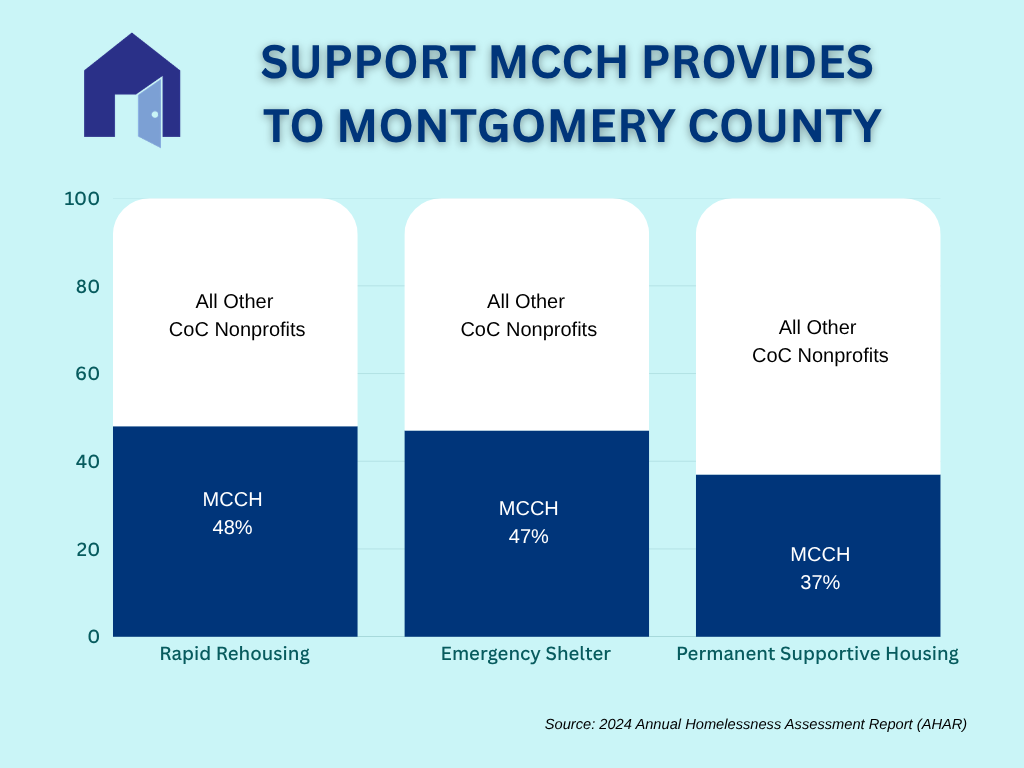
Today, MCCH provides more than one-third of the County’s Permanent Supportive Housing, which represents 541 households; that’s 154 families and 387 individuals living with physical or intellectual disabilities. We serve some of the most vulnerable residents in our community, and they rely on MCCH not only for housing but for the stability and dignity that come with a home.
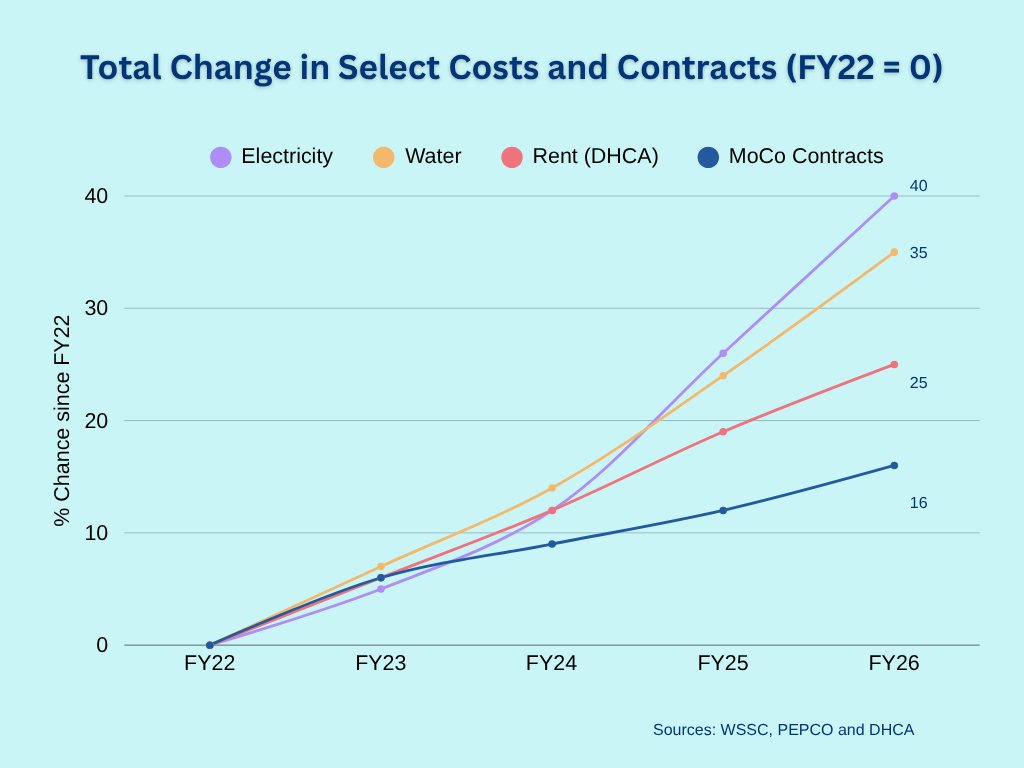
MCCH ensures these individuals and families can remain safely housed by providing rental assistance, paying for their water and electricity—expenses that rise year after year. In fact just last week, Pepco announced another rate hike, which, if approved, would be a 130% increase since 2016, according to People’s Counsel David Lapp. [Source: The Montgomery Banner]
In addition to our supportive housing programs, MCCH operates nearly half of the County’s emergency shelter beds for individuals. We just wrapped up hypothermia season at Nebel Street Emergency Shelter where we were at capacity almost every night serving 270 men in crisis. Last year, more than 820 men came through the shelter. We were encouraged to see the proposed $1.9 million in Homeless Services to sustain existing county contracts for emergency shelter and outreach.
Last year, we served more than 1,700 people in need across all our programs. Sixty percent of the people we serve are Black—a reflection of the deep racial inequities in employment and housing across the region. These disparities drive our commitment to advancing equity and social justice by providing non-discriminatory support and individualized resources that help each person overcome the systemic barriers they face.
We have two requests for the Council:
First, to continue delivering these essential services without interruption, MCCH respectfully requests an 8% inflationary adjustment. This would allow us to offset rising rent and utility costs in Montgomery County, an adjustment that simply keeps pace with the cost of providing housing.
In the FY27 recommended budget, the County Executive provides a 2.5% inflationary adjustment for nonprofit contracts across County government. Without an 8% increase, we would be forced to send five households back into homelessness, including one medically vulnerable adult, one Veteran, and three families with children.
We are also deeply concerned about the well-being of our own staff and the workforce stability of safety-net nonprofits. Many of our dedicated employees, 62% of which are Black and most of whom are Montgomery County residents themselves, struggle with rising costs of living. It is alarming to know that some could easily require homeless services if current trends continue. Paying minimum wage is not the same as paying a livable wage in Montgomery County, and the people doing this life-saving work deserve to earn enough to live securely in the community they serve.
With the County’s commitment to advancing racial equity and social justice, surely this lens can be focused on an organization that both serves and employs a majority Black population?
Our second request is for the Council to support what we call common-sense funding that sustains both the services MCCH provides and the workforce that delivers them. We ask the Council to support moving from reimbursement-based contracts to stabilize safety-net nonprofits’ operations and prevent potential service disruptions that result from delayed reimbursements.
Montgomery County has long been a leader in partnering with nonprofits to meet community needs and depends on us to deliver critical safety-net services on the front lines. To keep that partnership strong, we need payment policies that reflect how this work really operates. Allowing reasonable payments upon invoicing is a practical, equity driven step that will help us maintain quality, expand access, and ensure that when residents need us, we are there, fully staffed, stable, and focused on their success, not on managing a cash-flow gap. Updating our payment practices is a practical step to ensure that essential services provided by safety-net nonprofits remain strong and sustainable. Other jurisdictions provide grant or contract funding based on nonprofit invoicing, including the District of Columbia, Virginia, and Maryland’s Baltimore City and Howard, PG, Calvert, Anne Arundel, St. Mary's, and Wicomico counties.
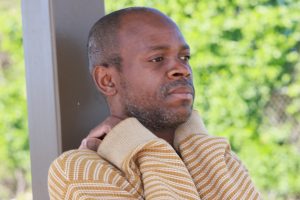
Before I close, I’d like to share a brief reminder of what this funding truly means. I brought with me a sign made by one of our clients. It’s a recreation of the sign he held while begging for help when he was living in the woods. (You can read more about him in a Washington Post article included in this packet.) Thanks to MCCH and County support, David has now lived stably in one of our Permanent Supportive Housing programs for seven years. Please, don’t send him, or anyone like him, back outdoors to once again beg for help.
Thank you for your time and continued partnership as we work together to end homelessness in Montgomery County. Attached are some graphics on the funding disparity, the Washington Post article, and background information on MCCH.
Here’s how you can help:
- Follow us on social media and share/repost our messages to raise awareness about the impact of delayed funding.
- Advocate for common-sense funding from the County to keep housing programs stable and responsive.
- Urge your councilmembers to increase funding for affordable housing!
- Donate to help bridge funding gaps and help MCCH meet the growing need for affordable housing and support for those in need.
When funding is delayed, services suffer, but when we act together, no one has to return to homelessness.